Vendor lock-in can turn today's shiny EV charging network into tomorrow's expensive headache. A CSMS (Charging Station Management System) or CPMS (Charge Point Management System) is the central nervous system of your charging operations, but the wrong choice can tie you to a single hardware vendor, limit your scalability, and make future upgrades painful. This article shows you how to evaluate CSMS platforms for true interoperability and future-proofing.
TL;DR
- CSMS and CPMS are interchangeable: Both terms describe backend software that manages EV chargers via OCPP. CPMS is legacy (OCPP 1.6), CSMS is modern (OCPP 2.0.1+).
- Open standards prevent lock-in: OCPP compliance across Core, Advanced Security, and Device Management is non-negotiable.
- Multi-vendor support matters: Test with your actual charger brands before committing.
- Look beyond basic session management: Modern CSMS handles asset health, local load balancing, and cybersecurity.
- Future-proof for 2026+: Prioritise ISO 15118 (Plug and Charge), OCPI (roaming), and firmware flexibility.
CSMS vs CPMS: same thing, different names
Charge Point Management Systems (CPMS) and Charging Station Management Systems (CSMS) are largely interchangeable terms for the backend software that monitors, operates, and manages EV charging hardware. Both use protocols like OCPP to handle charging sessions, billing, and remote diagnostics. CPMS is the older term from OCPP 1.6, focused on basic charge point management: starting sessions, stopping sessions, and billing drivers. CSMS is the updated terminology introduced in OCPP 2.0.1, managing the entire charging station including cooling systems, power modules, and local controllers. Today, most operators use them interchangeably, but CSMS better reflects 2026 capabilities.
The vendor lock-in trap
Vendor lock-in happens when proprietary hardware or software creates dependency: Hardware lock means chargers only talk to one backend via closed APIs. Firmware lock means updates require vendor intervention, blocking multi-vendor mixing. Data lock means session history and analytics are trapped in siloed platforms. Open standards like OCPP break these chains by standardising communication between chargers and backends, regardless of manufacturer. OCPP 2.0.1 certification for Core, Advanced Security, and Device Management ensures you can mix chargers from ABB, Delta, Tritium, or Wallbox under one platform.
Must-have features for vendor independence
1. Full OCPP Protocol Coverage: OCPP 1.6J for legacy compatibility. OCPP 2.0.1 minimum: Certificate-based auth, mTLS encryption, secure firmware updates, security event logging. OCPP 2.1 preview for smart charging and V2G readiness. Test it: Can it handle boot notifications, heartbeats, and remote start/stop across your charger brands?
2. Multi-vendor charger support: True interoperability means managing diverse hardware with different connectors (CCS1/2, CHAdeMO, Type 2), varying power classes (7kW AC to 350kW DC), and mixed firmware versions. Red flag: Platforms optimised for preferred partners only.
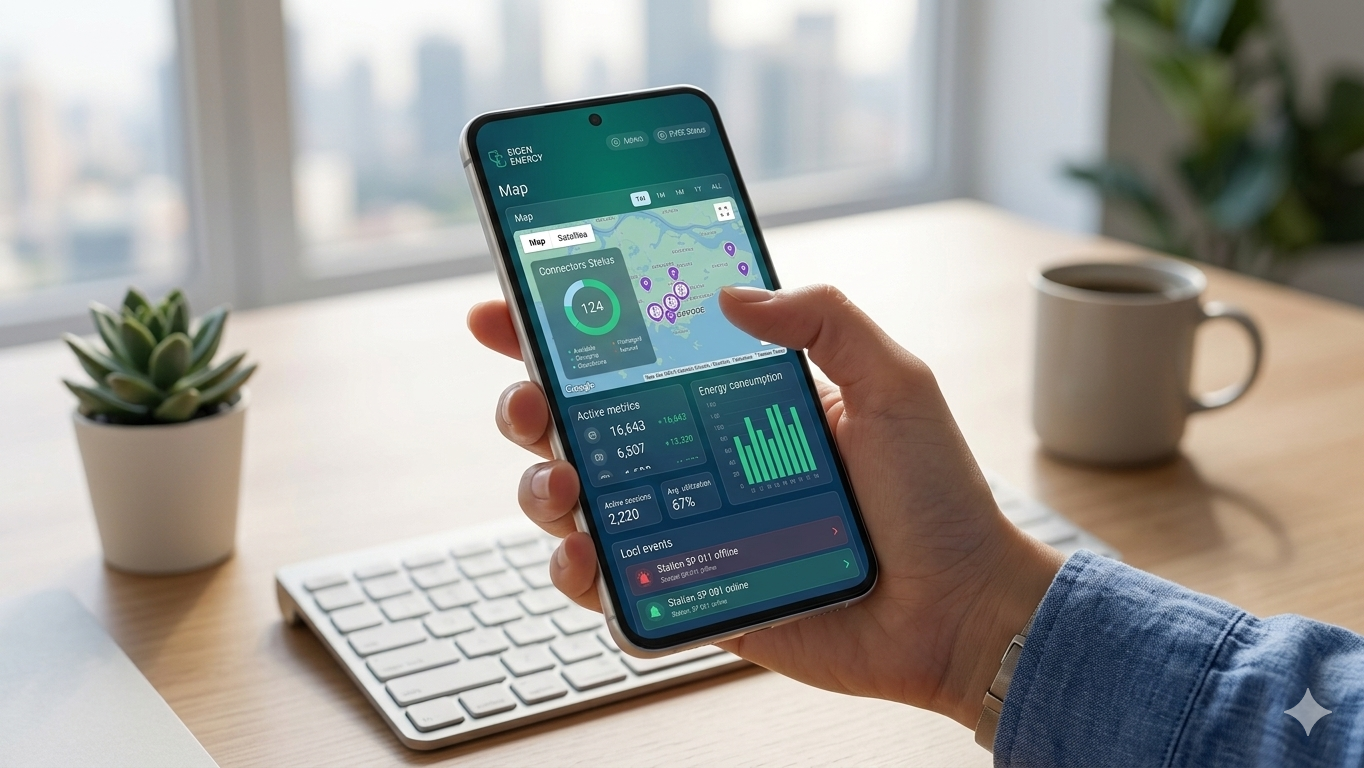
3. Device Management Beyond Sessions: Modern CSMS monitors station health, not just transactions - cable cooling pump status, power module temperatures, local load balancing, and predictive fault detection. This is where CPMS ends and CSMS begins.
4. Open APIs and Extensibility: OCPI for roaming and data exchange. REST APIs for ERP/CRM integration. ISO 15118 support for Plug and Charge. These prevent data silos and enable custom workflows.
5. Cybersecurity as a Baseline: Mutual TLS encryption, certificate management, intrusion detection logging, and compliance with EV cybersecurity standards. OCPP 2.0.1's security profile makes this table stakes.
FAQ
Q: Are CSMS and CPMS really the same?
Yes, largely interchangeable. CPMS (OCPP 1.6 era) focused on charge points/sessions; CSMS (OCPP 2.0.1+) adds station-wide device management. Both manage chargers via OCPP.
Q: What OCPP version do I need?
OCPP 2.0.1 minimum for security and features. 1.6J for legacy support. Verify Core and Advanced Security profiles.
Q: How do I avoid vendor lock-in?
Demand OCPP certification across your hardware mix. Test multi-vendor connectivity. Ensure open APIs for data export/integration.
Q: What's the difference between CSMS and a CPO dashboard?
CSMS is the backend protocol layer (OCPP communication). The dashboard is the user interface on top. A good CSMS powers multiple dashboards/interfaces.
Q: Does OCPP support Plug and Charge?
Yes, via ISO 15118 integration in OCPP 2.0.1+. Enables automatic authentication. No app/RFID needed.
Building a future-proof EV charging network starts with the right CSMS decision. Don't let proprietary lock-in limit your growth. Talk to us about OCPP-certified CSMS that works with any charger: Connect with an Eigen Expert.